
42 parts / minVision Guided
Continuous on-the-fly camera tracking
Achieve micron-level electronic insertion, automated screw driving with torque control, and rapid quality sorting with integrated 6-axis force feedback.
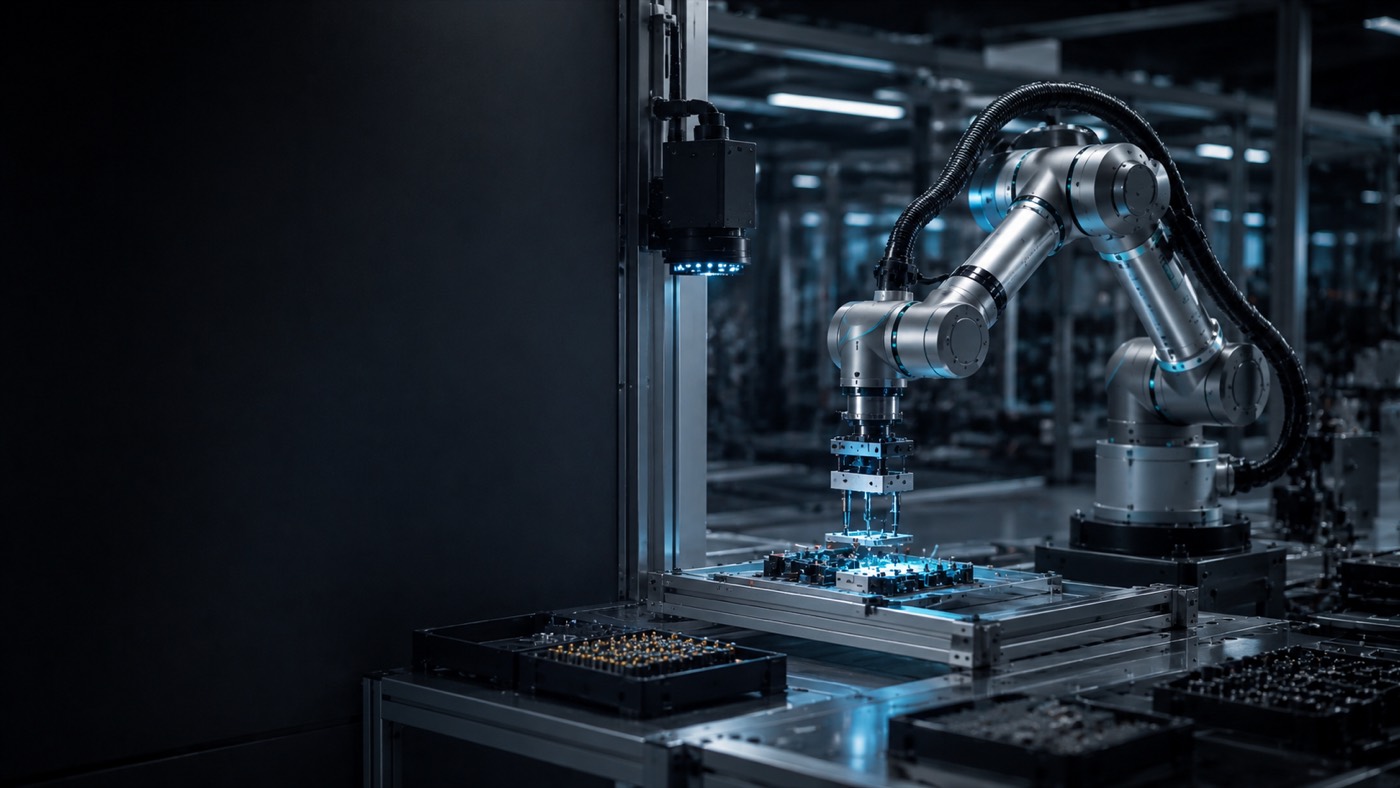
Continuous on-the-fly camera tracking
Spiral search algorithm feedback
Automatic screw feeder synchronizer
| Hardware category | Brand | Supported models and EOAT | Fieldbus protocol | Safety and industrial specification |
|---|---|---|---|---|
| Cobot Arm | Techman Robot | TM5-900 AI / Integrated Vision Spec | GigE / EtherCAT | ISO Class 5 Cleanroom Ready |
| Cobot Arm | Universal Robots | UR3e / UR5e Lightweight Precision Arm | Profinet / USB 3.0 | ISO 15066 ESD Protected |
| EOAT Mechanical | OnRobot / Robotiq | RG2 Electric Gripper & 6-Axis Force Sensor | Modbus RTU RS485 | Fingertip Soft Touch Pad |
| EOAT Mechanical | Weber / Desoutter | SEV Automated Screwdriving Spindle | EtherNet/IP Fieldbus | Depth & Angle Verification |
Force sensors detect jamming resistance as low as 0.5N, retracting the tool instantly before delicate connector pins or plastic housings snap. Fully compliant with cleanroom and electronics anti-static mandates.
For production teams that want to capitalize the cell and run without an ongoing lease commitment.
Configure CapEx IntegrationFast automation without waiting for a large capital budget approval cycle.
Launch OpEx RaaS ApplicationPayload, reach, repeatability, and deployment fit for engineering review before selecting a Project Builder workflow.
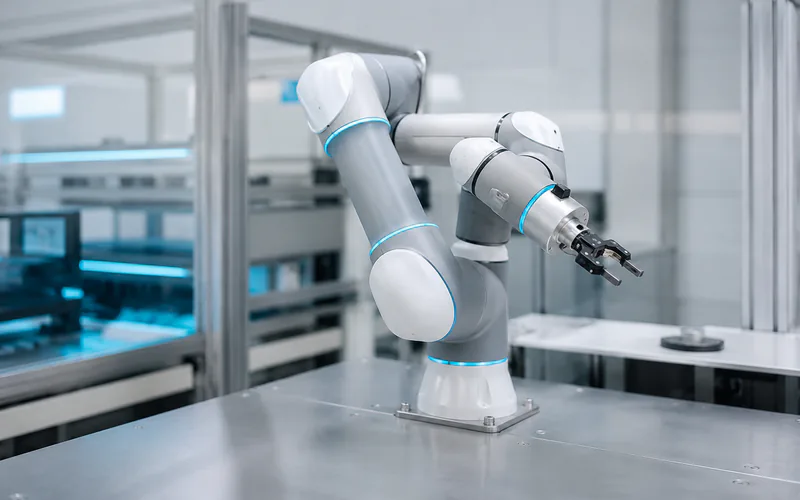
CNC machine tending · Light assembly · Pick and place · Inspection and testing
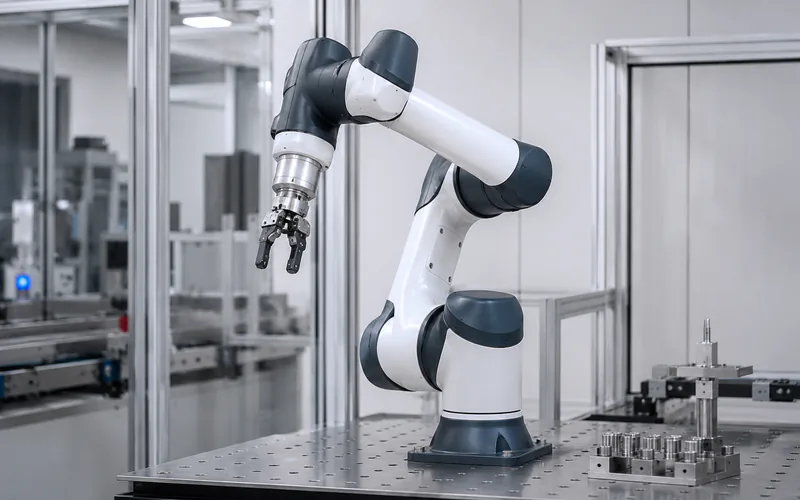
Precision assembly · Machine tending · Screwdriving · Quality inspection
Swipe or use arrows to compare models
CNC machine tending · Light assembly · Pick and place · Inspection and testing
Precision assembly · Machine tending · Screwdriving · Quality inspection
Product names may be trademarks of their respective manufacturers. Images are reference visuals for comparison; final payload, reach, repeatability, safety limits, and integration scope must be verified against the current manufacturer datasheet and site audit.
Engineering references
These short references help connect this application workflow with the terms, safety checks, and cost model used elsewhere on BotNots.
FAQ
These questions focus on precision, part variation, and when another automation type may be better.
FAQ 01
Pick-and-place needs vision or force sensing when parts are not presented in a fixed repeatable location, orientation, or tolerance window. Simple fixtures may be enough for stable parts, while loose bins, reflective surfaces, small connectors, or insertion tasks usually need sensing and validation.
FAQ 02
A cobot can handle part variation when the gripper, sensing, program logic, and fixtures are designed around the expected range. Variation in size, surface, weight, orientation, or stiffness must be tested with representative parts before assuming one EOAT can cover every SKU.
FAQ 03
A SCARA, delta, or industrial robot may be better when the task needs very high speed, high stiffness, small-parts sorting at scale, or a guarded cell with no operator access during production. A cobot is strongest when flexibility, access, and simpler redeployment matter more than maximum throughput.
Select one vertical below to calibrate kinematic calculations.
Connect adjacent automation processes when planning the complete production flow.
Review CNC machine-tending workflows for automated loading, unloading, and lights-out production.
Evaluate end-of-line palletizing requirements for finished parts, cartons, and production containers.
Need to validate payload, reach, and repeatability first? Compare cobot technical specifications across the available hardware classes.