
80 mm/s±0.03mm Path Accuracy
Constant voltage weaving control
Bridge the certified 3G/6G welder gap instantly. Achieve consistent MIG/TIG penetration, torch speed up to 80 mm/s, zero burn-through on thin alloys, and ROI payback under 10.5 months.
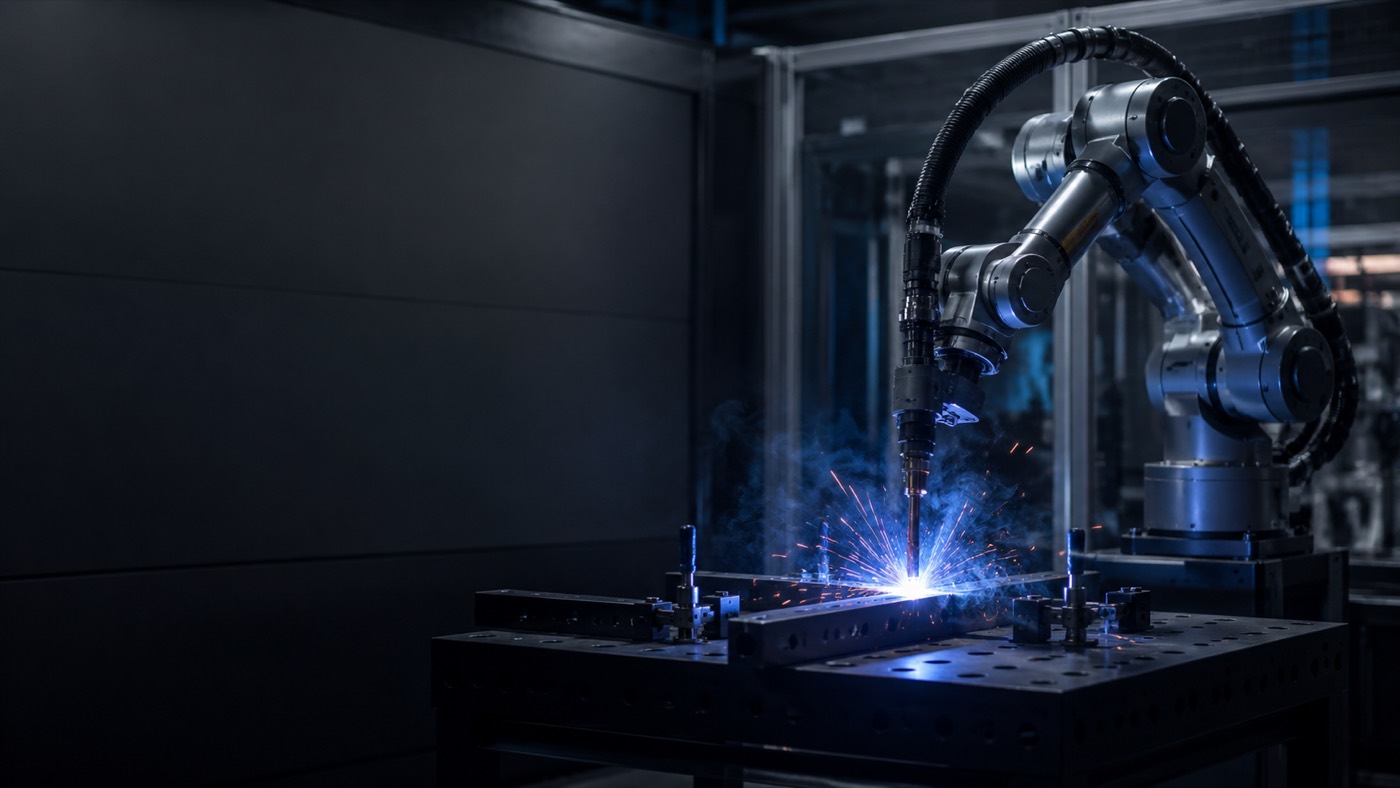
Constant voltage weaving control
Argon & CO2 mixed shielding gas ready
Real-time thermal compensation
| Hardware category | Brand | Supported models and EOAT | Fieldbus protocol | Safety and industrial specification |
|---|---|---|---|---|
| Cobot Arm | Universal Robots | UR10e / UR20 Welding Edition | Profinet / Modbus TCP | ISO 13849-1 PL d Cat 3 |
| Cobot Arm | FANUC | CRX-10iA/L Welding Package | EtherNet/IP | ISO 10218-1 Certified |
| Welding Torch | Abicor Binzel | iROB Torch System & Air-Cooled Neck | Digital CAN-Bus | IP54 Spatter Protected |
| Welding Torch | Fronius / Lorch | TPS/i Robotics Edition Digital Power Source | EtherCAT High Speed | CE Industrial Grade |
The safety concept should specify dual-channel safety scanners, force-torque limits, and stop behavior for the completed welding cell before deployment.
Welding fit check
Use this as an early screening view before fixture design, torch selection, and safety validation.
| Task type | Cobot fit | What to verify |
|---|---|---|
| Repeatable seams (flat/simple geometry) | ✅ Excellent | Program once, run all |
| TIG precision joints (high tolerance) | ⚠️ Good with setup | Fixture + probe alignment |
| Variable gaps (irregular parts) | ⚠️ Conditional | Vision system + adaptive speed |
| Heavy multi-pass welds (>3 passes) | ❌ Poor fit | Manual + semi-auto better |
For production teams that want to capitalize the cell and run without an ongoing lease commitment.
Configure CapEx IntegrationFast automation without waiting for a large capital budget approval cycle.
Launch OpEx RaaS ApplicationPayload, reach, repeatability, and deployment fit for engineering review before selecting a Project Builder workflow.
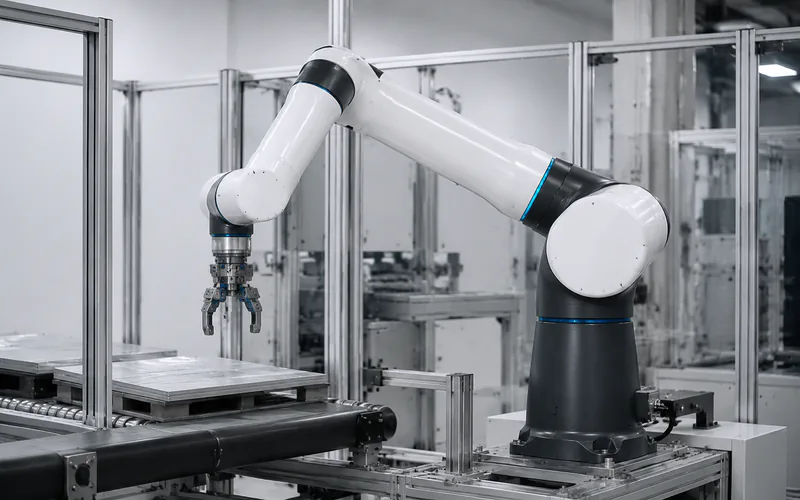
Palletizing · Machine loading · Welding assistance · Material handling
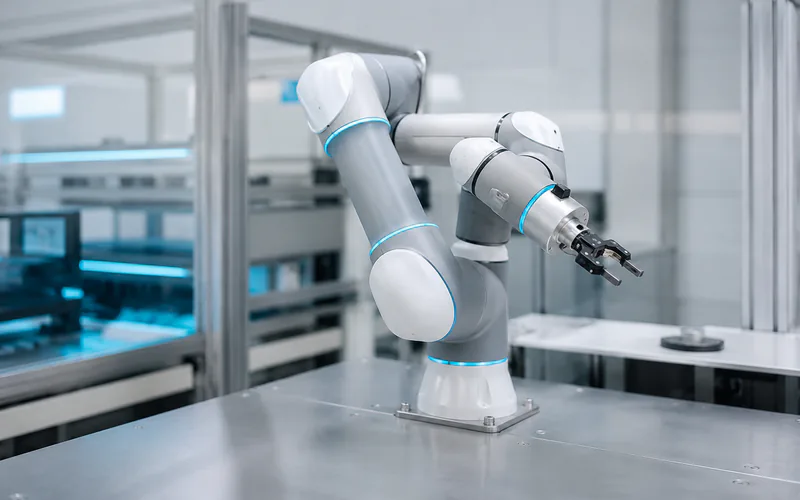
CNC machine tending · Light assembly · Pick and place · Inspection and testing
Swipe or use arrows to compare models
Palletizing · Machine loading · Welding assistance · Material handling
CNC machine tending · Light assembly · Pick and place · Inspection and testing
Product names may be trademarks of their respective manufacturers. Images are reference visuals for comparison; final payload, reach, repeatability, safety limits, and integration scope must be verified against the current manufacturer datasheet and site audit.
Engineering references
These short references help connect this application workflow with the terms, safety checks, and cost model used elsewhere on BotNots.
FAQ
These questions focus on welding-specific checks before fixture, torch, and safety design are finalized.
FAQ 01
Yes, cobots can support MIG and TIG welding when the joint path, fixture access, torch package, power source, shielding gas setup, and safety concept are engineered as a complete cell. Fit still depends on weld length, heat input, part variation, seam tracking needs, and whether the workpiece can be presented repeatably.
FAQ 02
A cobot welding cell needs repeatable fixtures, controlled part presentation, suitable fume extraction, torch cable management, and a risk assessment for heat, arc flash, sharp edges, and robot motion. Collaborative operation does not remove the need to validate process hazards around the finished cell.
FAQ 03
Cobot welding is usually a poor fit when parts cannot be located repeatably, weld paths change unpredictably, cycle time requires very high continuous speed, or the process needs heavy guarding for heat, spatter, fumes, or access. In those cases, a conventional robotic welding cell or manual process may be better.
Select one vertical below to calibrate kinematic calculations.
Connect adjacent automation processes when planning the complete production flow.
Review CNC machine-tending workflows for automated loading, unloading, and lights-out production.
Select the right cobot for assembly when parts also require inspection, sorting, or precision placement.
Need to validate payload, reach, and repeatability first? Compare cobot technical specifications across the available hardware classes.